01
The premise
Jenari was commissioned by a UK-based entrepreneur with one clear thesis: there are hundreds of thousands of West Africans living in the UK, and the food they cook at home is the same food they cooked at home before, but the way they shop for it is broken. Small ethnic-food shops in Manchester and Leeds, occasional trips to London, unreliable stock, no delivery, no accountability. The brief was to design a proper commerce product for that market, mobile app, website, and the whole shopping journey from browsing to checkout to charity.
I led design across the mobile app, the website, and the brand system.
02
The problem worth designing for
The West African diaspora in the UK isn't short of food. It's short of a good way to shop for it. Jenari's users know what egusi is. They don't need it explained, labelled exotic, or lumped into a general Asian-and-African aisle. They need to open an app, see shombo is in season and stockfish is on clearance, and get it delivered to a flat in Manchester by the weekend.
A West African grocery app as familiar, fast, and well-stocked as any UK supermarket, made by the community, not for it as a market.
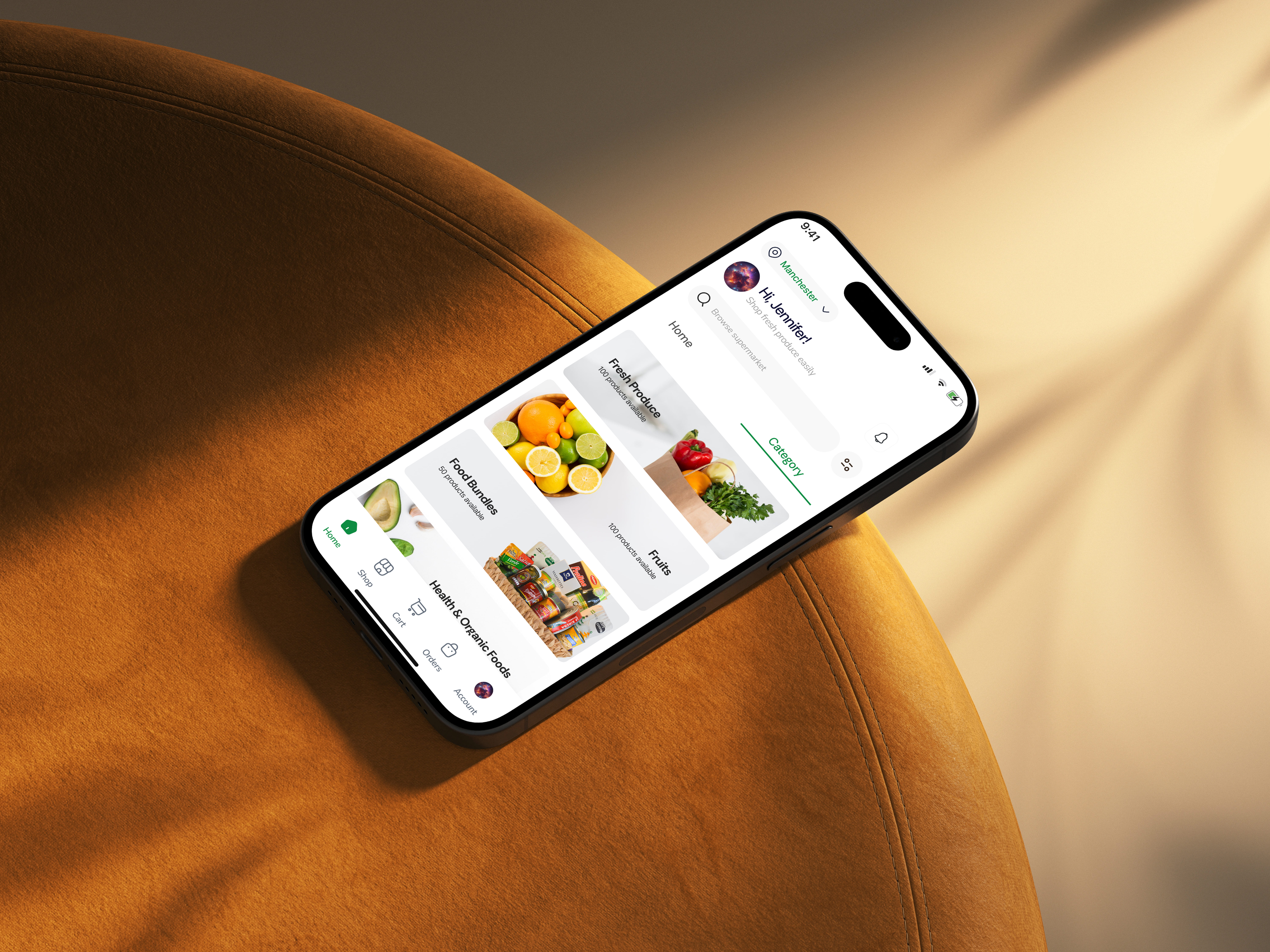
Location as the first line of the interface.
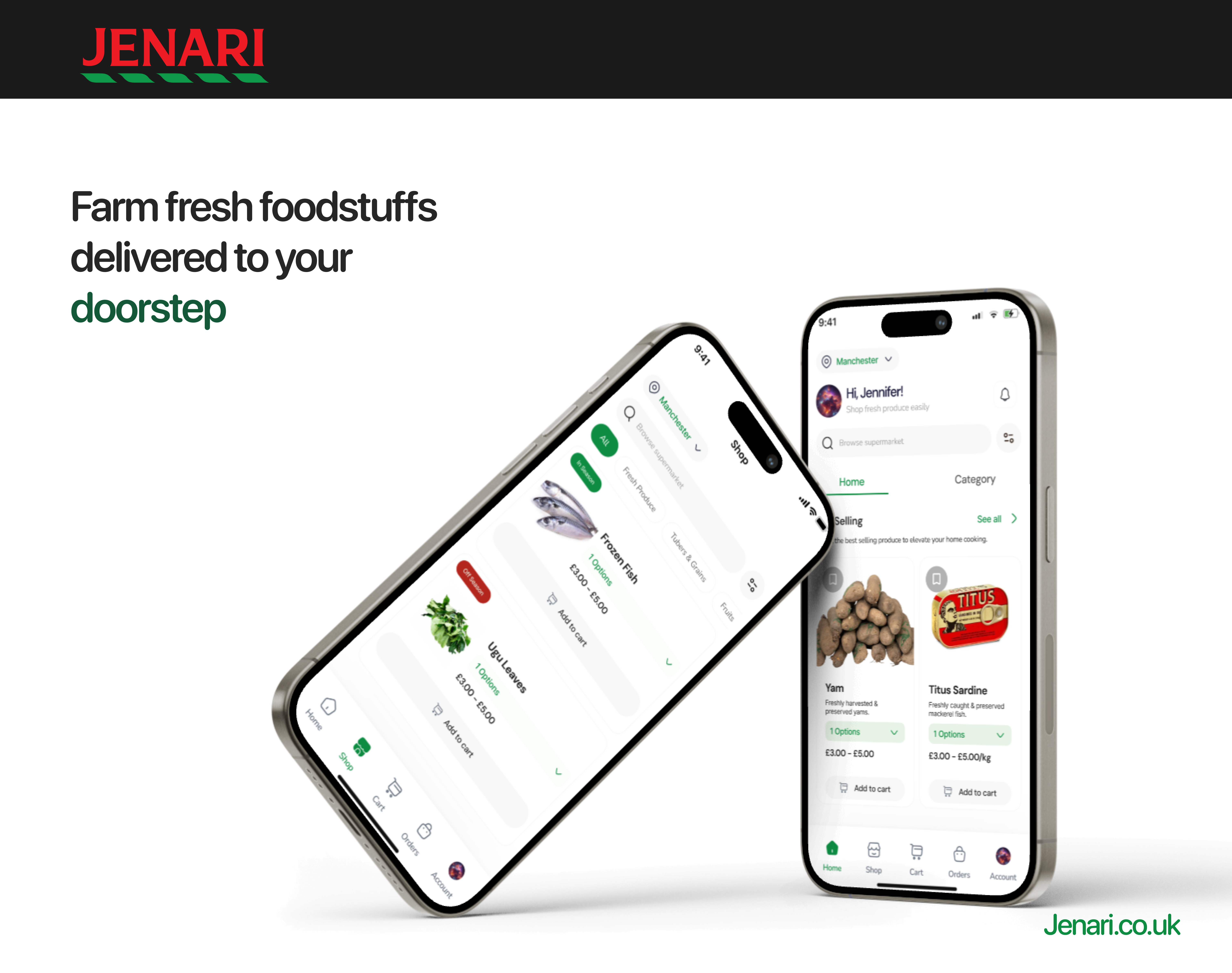
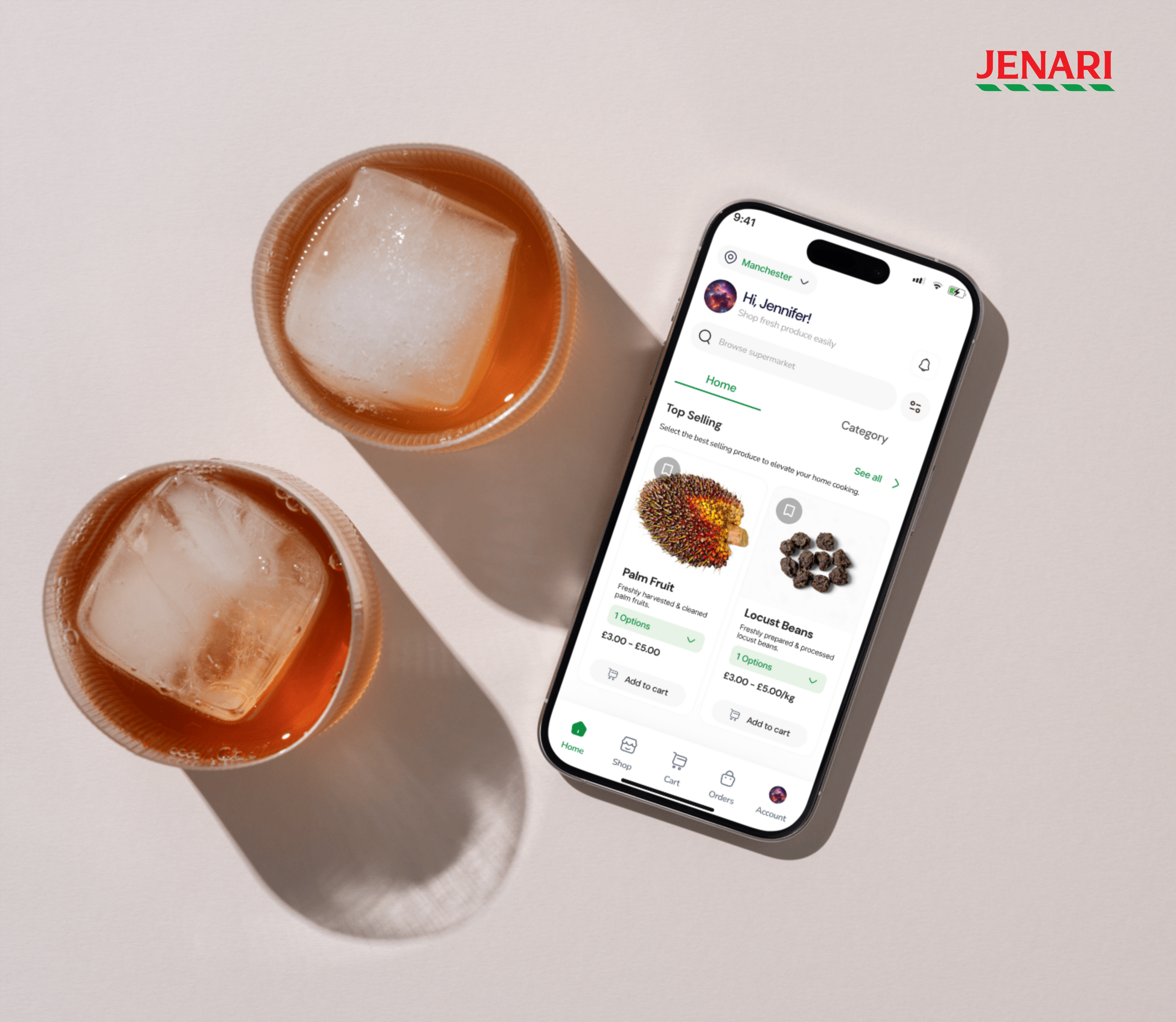
The home screen doesn't open with a banner or promo. It opens with the user's city, like Manchester or Leeds, and a personal greeting. It's a small detail doing heavy work: it shows the app knows they're shopping from the UK side of the bridge, and it anchors every downstream flow, from delivery to address book to in-season inventory. For a diaspora product, "where you are" isn't a setting. It's the frame.
Inventory states that speak the language of the buyer.
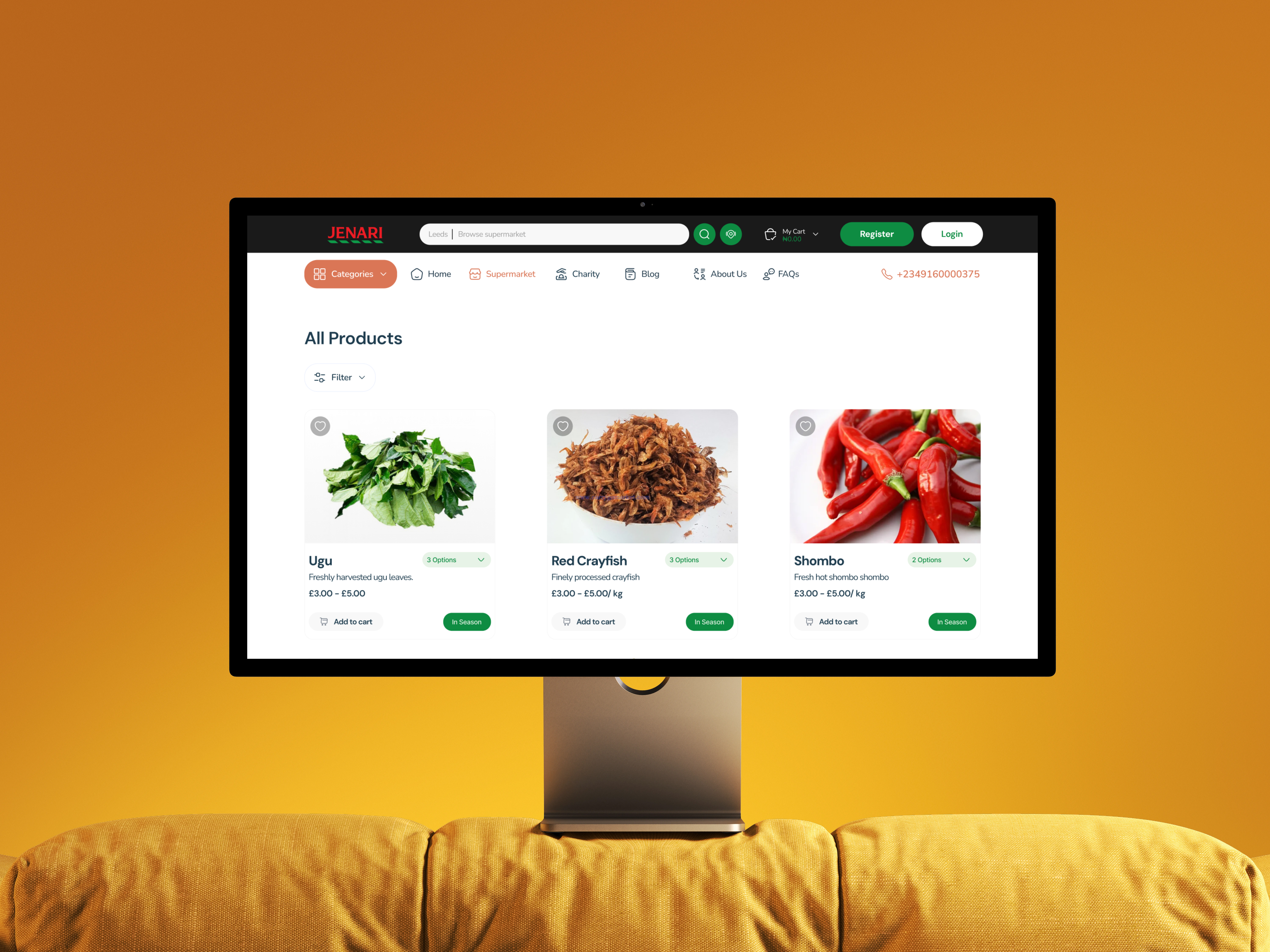
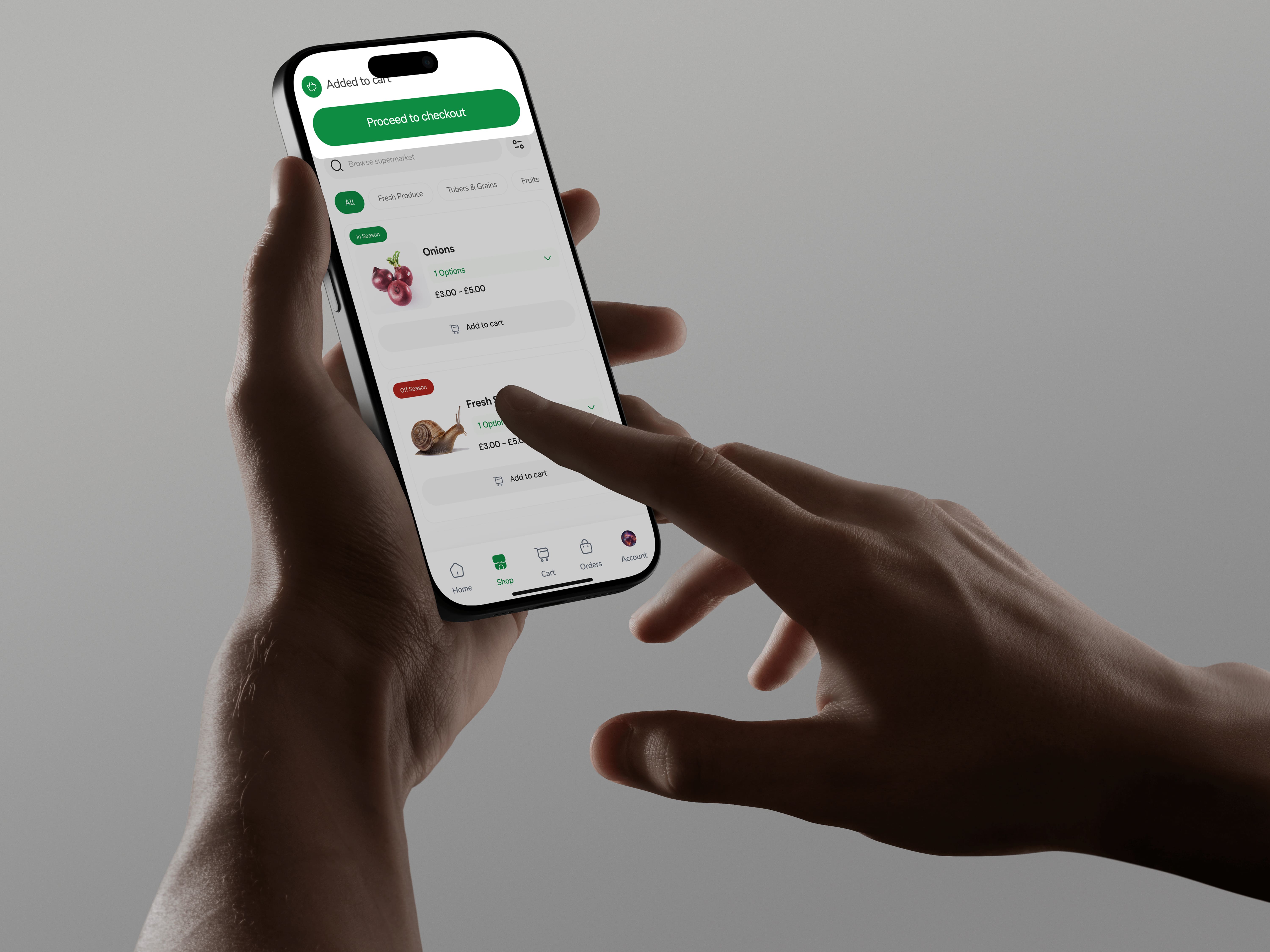
Every product card shows one of three states: In Season, Clearance, or a plain price. Ugu peaks in autumn, stockfish sometimes needs to move, tomato jos keeps its own cycle. These states reflect how West African food really moves through a UK supply chain, giving shoppers the intuition a market seller would. They also show that Jenari isn't a static catalogue. It's a produce shop that changes with the seasons.
Charity as a checkout choice, not a marketing page.
Most platforms hide social impact on a page nobody reads. Jenari puts it in checkout: shoppers can add a donation to Dream Catchers Academy, a real orphanage, and later see how it's used. Giving becomes as ordinary as choosing a payment method. Jenari isn't only a shop. It lets the diaspora feed themselves and send something back at the same time.
03
The product experience
Jenari shows commerce design can carry cultural specificity without decoration. It assumes its diaspora audience already knows what they want, and builds around that: a location-first home screen, seasonal inventory states, and a checkout where shopping and giving happen together.
04
What this proves
The design treats app, web, and brand as one system, not three deliverables. It makes cultural context structural: location, language, seasonality, and community live in the flows themselves, not as marketing layered on a generic template.
Gallery
Selected screens and details.